
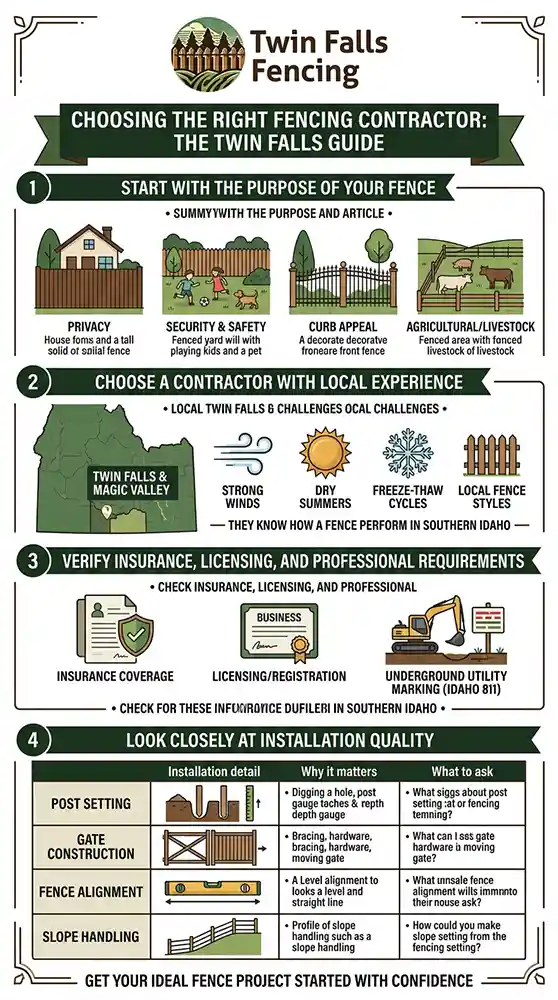
Choosing the right fencing contractor is one of the most important decisions you will make for your property. A fence is not just a line around a yard. It affects privacy, security, curb appeal, pets, livestock, resale value, and how much maintenance you will deal with for years.
In Twin Falls and the surrounding Magic Valley, the choice matters even more. Wind, sun exposure, irrigation, soil conditions, freeze-thaw cycles, and rural property needs can all affect how well a fence performs. The right contractor will not only install panels or posts. They will help you choose a fence that fits your land, your goals, and your budget.
This guide walks through what to look for, what questions to ask, and which red flags to avoid before hiring a fencing contractor.
Start With the Purpose of Your Fence
Before comparing contractors, get clear on why you want a fence in the first place. A contractor can give better advice when they understand the problem you are trying to solve.
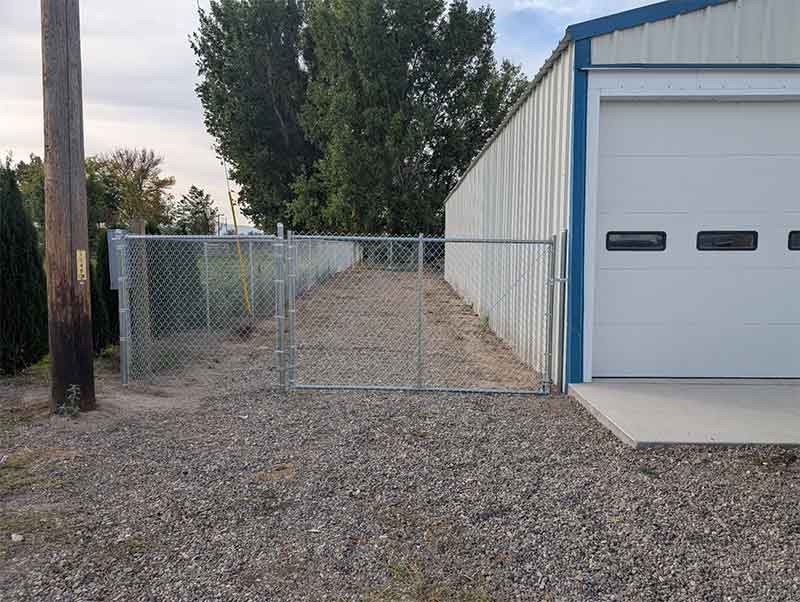
Some homeowners need privacy from a neighboring property. Others want a safer backyard for children or pets. Businesses may need controlled access, perimeter security, or a durable chain link enclosure. Agricultural properties often need strong fencing for cattle, horses, equipment areas, or field boundaries.
Your purpose influences almost every decision, including material, height, post depth, gate placement, visibility, and cost. For example, a vinyl privacy fence is very different from a field fence for livestock, and a decorative front yard fence has different requirements than a commercial security fence.
If you are still comparing materials, reviewing the main types of fencing can help you narrow down your options before requesting estimates.
How to Choose the Right Fencing Contractor With Local Experience
A fencing contractor who understands Twin Falls conditions can help you avoid costly mistakes. Local knowledge matters because fences are exposed structures. They have to stand up to weather, soil movement, irrigation patterns, and everyday use.
In Southern Idaho, a good contractor should understand how to plan for strong wind, dry summers, winter moisture, sloped lots, rocky soil, and rural access needs. They should also be familiar with common fence styles in Twin Falls neighborhoods, nearby communities, and agricultural areas.
Local experience can make a big difference in details such as post setting, gate bracing, material selection, and layout. A fence that looks good on day one but starts leaning after a season is usually the result of poor planning, poor installation, or both.
When speaking with a contractor, ask whether they have completed projects similar to yours. A backyard privacy fence, a commercial chain link enclosure, and a cattle fence all require different planning.
Verify Insurance, Licensing, and Professional Requirements
A reputable fencing contractor should be willing to discuss the business basics clearly. Before signing a contract, ask for proof of insurance and any applicable registration or licensing information. Requirements can vary depending on location and scope of work, but a legitimate professional should not be evasive when you ask.
Insurance is especially important because fence installation involves digging, tools, heavy materials, and work near buildings, driveways, irrigation lines, and utilities. If something goes wrong, you want to know the contractor has proper coverage.
You should also ask how the contractor handles underground utility marking. In Idaho, homeowners and contractors should contact the appropriate utility notification service before digging. Idaho 811 provides guidance for safe digging and utility location requests. A contractor who casually skips this step is putting your property and safety at risk.
Look Closely at Installation Quality
Many homeowners compare fence materials but overlook installation quality. That is a mistake. Even the best material can fail early if it is installed poorly.
A strong fence depends on proper layout, post depth, alignment, spacing, bracing, fasteners, drainage, and gate hardware. Gates are especially important because they move, carry weight, and often show the first signs of poor workmanship.
Use this table when evaluating a contractor’s approach:
| Installation detail | Why it matters | What to ask |
|---|---|---|
| Post setting | Posts support the entire fence and resist wind pressure | How deep will posts be set for my fence type and soil? |
| Gate construction | Gates fail quickly if they are undersized, poorly braced, or hung on weak posts | What hardware and bracing do you recommend for this gate? |
| Fence alignment | Crooked lines reduce curb appeal and can create boundary disputes | How will you confirm the fence line before installation? |
| Slope handling | Sloped lots require proper panel stepping or racking | How will the fence follow the grade of my property? |
| Fasteners and hardware | Low-quality hardware can rust, loosen, or sag | What type of fasteners and hinges will be used? |
| Drainage near posts | Standing water can shorten the life of wood and metal components | How will you handle low spots or wet soil areas? |
A good contractor should be able to explain these details in plain language. If the only answer you receive is “we always do it this way,” keep asking questions.
Compare Estimates the Right Way
Getting multiple estimates is smart, but comparing fence bids is not always simple. The lowest price is not automatically the best value. A cheaper estimate may leave out important items like removal of old fencing, heavier posts, quality hardware, site preparation, or gate adjustments.
When reviewing estimates, look at what is included and what is excluded. A clear estimate should help you understand the scope, materials, timeline, payment terms, and responsibilities.
| Estimate item | Why it matters |
|---|---|
| Fence length and height | Confirms the contractor measured the project accurately |
| Material type and grade | Prevents confusion over vinyl thickness, wood type, wire type, or chain link gauge |
| Number and type of gates | Gates can significantly affect cost and installation complexity |
| Old fence removal | Avoids surprise charges after work begins |
| Site preparation | Covers brush clearing, grading concerns, or access issues |
| Utility marking responsibility | Clarifies who initiates safe digging procedures |
| Timeline | Sets expectations for scheduling and completion |
| Warranty or workmanship terms | Shows how the contractor handles issues after installation |
If one quote is much lower than the others, ask why. Sometimes there is a legitimate reason. Other times, the estimate may be missing important work or using lower-quality materials.
For repair projects, it is also helpful to understand how contractors think about cost drivers. Our guide to fence repair cost explains why material type, damage level, post condition, and access can change the final price.
Ask Better Questions Before You Hire
The best way to evaluate a fencing contractor is to ask specific questions. You do not need to know every technical detail, but you should expect clear answers.
Here are questions worth asking before you choose:
- How long have you worked on fences in the Twin Falls area?
- Have you installed this type of fence before?
- What material do you recommend for my goal, and why?
- How will you handle slopes, corners, and uneven ground?
- What kind of posts, hardware, and fasteners will you use?
- Who is responsible for locating utilities before digging?
- Will the estimate include gates, removal, cleanup, and haul-away?
- What is the expected timeline for my project?
- What could cause the price or schedule to change?
- What should I do to maintain this fence after installation?
A professional contractor will welcome these questions. Strong communication before the project usually leads to fewer problems during the project.
Match the Contractor to the Type of Project
Not every fencing project requires the same skill set. A contractor who mainly installs small residential picket fences may not be the best fit for a large agricultural project. Likewise, a farm fencing specialist may not be the right choice for a decorative vinyl privacy fence in a neighborhood with HOA guidelines.
Think about the contractor’s experience in relation to your specific project.
| Project type | Contractor should understand |
|---|---|
| Residential fencing | Privacy, curb appeal, pets, children, gates, HOA rules, and property lines |
| Commercial fencing | Security, access control, durability, traffic flow, and professional appearance |
| Agricultural fencing | Livestock pressure, corner bracing, gates, terrain, and long fence runs |
| Vinyl fencing | Panel layout, expansion, post spacing, wind exposure, and low-maintenance design |
| Wood fencing | Post protection, staining needs, board spacing, warping, and long-term upkeep |
| Chain link fencing | Gauge, tensioning, top rail, terminals, gates, and security requirements |
| Fence repair | Matching materials, diagnosing post failure, gate realignment, and cost-effective fixes |
Twin Falls Fencing works with residential, commercial, and agricultural fencing, including vinyl, wood, chain link, gates, repairs, custom planning, pergolas, and decks. Still, the same principle applies to any contractor you consider: choose someone whose experience matches your actual job.
Pay Attention to the Consultation Process
A good consultation should feel like a real evaluation, not a rushed sales pitch. The contractor should ask about your goals, walk the property, take measurements, identify challenges, and explain practical options.
They may ask about pets, children, privacy, wind exposure, irrigation, livestock, vehicles, gate use, budget, maintenance preferences, and future plans. These questions are not just small talk. They help the contractor design a fence that works in daily life.
This consultative approach is valuable in many professional services. Whether you are choosing a contractor or comparing providers for something completely different, the best professionals start by understanding your specific situation before recommending a solution.
For fencing, that means the contractor should not recommend the same material, height, and layout for every property. A one-size-fits-all approach often leads to disappointment.
Review Past Work and Reputation
Photos, references, and reviews can tell you a lot about a fencing contractor. Look for signs of consistent workmanship, straight lines, clean job sites, sturdy gates, and projects similar to yours.
Online reviews are useful, but read them carefully. A few negative reviews do not always tell the whole story, especially if the contractor responds professionally. What you want to see is a pattern of reliability, communication, quality, and follow-through.
If possible, ask to see examples of completed work. For larger or more complex projects, references can also help. A contractor who has done good work locally should be comfortable sharing examples.
Pay special attention to how they communicate during the estimate process. If they are slow, vague, dismissive, or disorganized before you hire them, that behavior may continue once the project starts.
Understand Materials, Maintenance, and Long-Term Value
A fence is a long-term investment, so ask your contractor to explain not only upfront cost but also maintenance and lifespan. A cheaper fence may cost more over time if it needs frequent repairs, staining, replacement parts, or early replacement.
For example, wood can offer a classic look and design flexibility, but it usually needs more maintenance than vinyl. Vinyl often costs more upfront but is popular with homeowners who want a cleaner, lower-maintenance option. Chain link is practical for security, pets, and budget-conscious projects, while agricultural fencing must be chosen around livestock needs and property layout.
If you are deciding between popular residential materials, our vinyl vs wood fencing comparison can help you think through maintenance, appearance, and long-term value.
The right contractor will explain trade-offs honestly. Be cautious if someone pushes only the most expensive option or only the cheapest option without considering your priorities.
Watch for Red Flags
Most fencing contractors are honest professionals, but it is still important to protect yourself. Slow down if you notice warning signs.
Common red flags include:
- No written estimate or contract
- Refusal to provide proof of insurance
- Vague material descriptions
- Pressure to make an immediate decision
- Large cash-only deposit requests
- No discussion of utilities before digging
- Poor communication or missed appointments
- No local examples of completed work
- Unclear warranty or workmanship terms
- Dismissive answers when you ask technical questions
One red flag may have an explanation. Several red flags together should make you reconsider.
Make Sure the Contract Is Clear
Once you choose a contractor, get the agreement in writing. A clear contract protects both you and the contractor by defining expectations before work begins.
A good fence contract or written proposal should include the project location, fence type, approximate footage, height, materials, gates, removal work, site preparation, payment schedule, estimated timeline, and warranty details. It should also explain how changes are handled if unexpected conditions appear during installation.
Do not rely only on verbal promises. If something matters to you, such as a specific gate location, material color, fence height, or old fence removal, make sure it appears in writing.
Prepare Your Property Before Installation
Even when you hire a professional, a little preparation can help the project go smoothly. Confirm your property lines if there is any uncertainty. Check HOA rules or neighborhood requirements if they apply. Move personal items, lawn furniture, tools, and vehicles away from the work area.
It is also helpful to mark irrigation components, private lines, sprinkler heads, septic features, or anything else the contractor should know about. Utility locating services help with public utilities, but they may not mark every private system on your property.
Talk through gate swing direction, pet containment needs, and access routes before installation begins. Small decisions made early can prevent frustration later.
Frequently Asked Questions
How do I know if a fencing contractor is reputable? Look for local experience, proof of insurance, clear written estimates, strong communication, examples of past work, and a willingness to explain materials and installation methods.
Should I choose the cheapest fence estimate? Not always. A low estimate may be missing important items such as quality posts, gate hardware, old fence removal, cleanup, or proper site preparation. Compare the full scope, not just the final price.
What should I ask before hiring a fencing contractor? Ask about local experience, material recommendations, post setting, utility marking, gates, timeline, warranty, cleanup, and how they handle unexpected site conditions.
Do I need to know my property line before installing a fence? Yes, you should be confident about your property line before installation. If there is uncertainty, consider a survey or review property records before work begins.
What type of fence is best for Twin Falls homes? The best fence depends on your goals. Vinyl is popular for low-maintenance privacy, wood offers a traditional look, chain link is practical and cost-effective, and agricultural fencing is best for livestock and rural boundaries.
Ready to Choose a Fencing Contractor in Twin Falls?
The right fencing contractor will help you plan a fence that looks good, performs well, and fits your property. Take time to compare experience, communication, installation quality, materials, and written estimates before making your decision.
If you are planning a residential, commercial, or agricultural fence in Twin Falls or the surrounding Idaho area, Twin Falls Fencing can help with installation, repair, gates, vinyl, wood, chain link, custom design, and more.
Contact Twin Falls Fencing today to schedule a free fencing consultation and get expert guidance for your next project.