
A fence on an Idaho property has to do more than mark a boundary. Around Twin Falls and the Magic Valley, it may need to stand up to wind, intense sun, irrigation moisture, freeze-thaw cycles, livestock pressure, pets, kids, and daily gate use. That is why good fence installation services start long before the first post goes into the ground.
For homeowners, the right fence can add privacy, security, and curb appeal. For farms and acreage owners, fencing protects animals, manages pasture movement, and helps keep operations running smoothly. In both cases, the best results come from matching the fence design to the land, the purpose, and the realities of southern Idaho weather.
Why fence installation services in Idaho homes and farms requires local planning
Idaho properties vary widely. A backyard in Twin Falls may need a clean vinyl privacy fence that looks good from the street and meets neighborhood expectations. A rural pasture outside town may need strong corners, reliable gates, and fencing that can handle livestock and wind exposure. A commercial lot may need chain link for visibility and security, while a small acreage may need a mix of residential and agricultural fencing.
Local conditions matter because fences fail most often at the weak points: shallow posts, poor drainage, undersized corners, cheap hardware, or a layout that ignores slope and traffic patterns. In southern Idaho, installers also have to consider hard or rocky soil, sprinkler overspray, drifting snow, wind loads, UV exposure, and seasonal ground movement.
Professional fence installation services help account for those conditions during planning, not after problems show up. A properly planned fence should answer practical questions such as:
- What is the fence supposed to do: privacy, containment, security, curb appeal, livestock control, or all of the above?
- Which material fits the property, maintenance expectations, and budget?
- Where should gates go for vehicles, equipment, animals, trash access, and emergency access?
- Are property lines, easements, irrigation features, and underground utilities clearly identified?
- How will the fence hold up over time in Idaho weather?
These decisions affect the appearance, lifespan, and day-to-day usefulness of the finished fence.
Residential fence installation services for Idaho homes
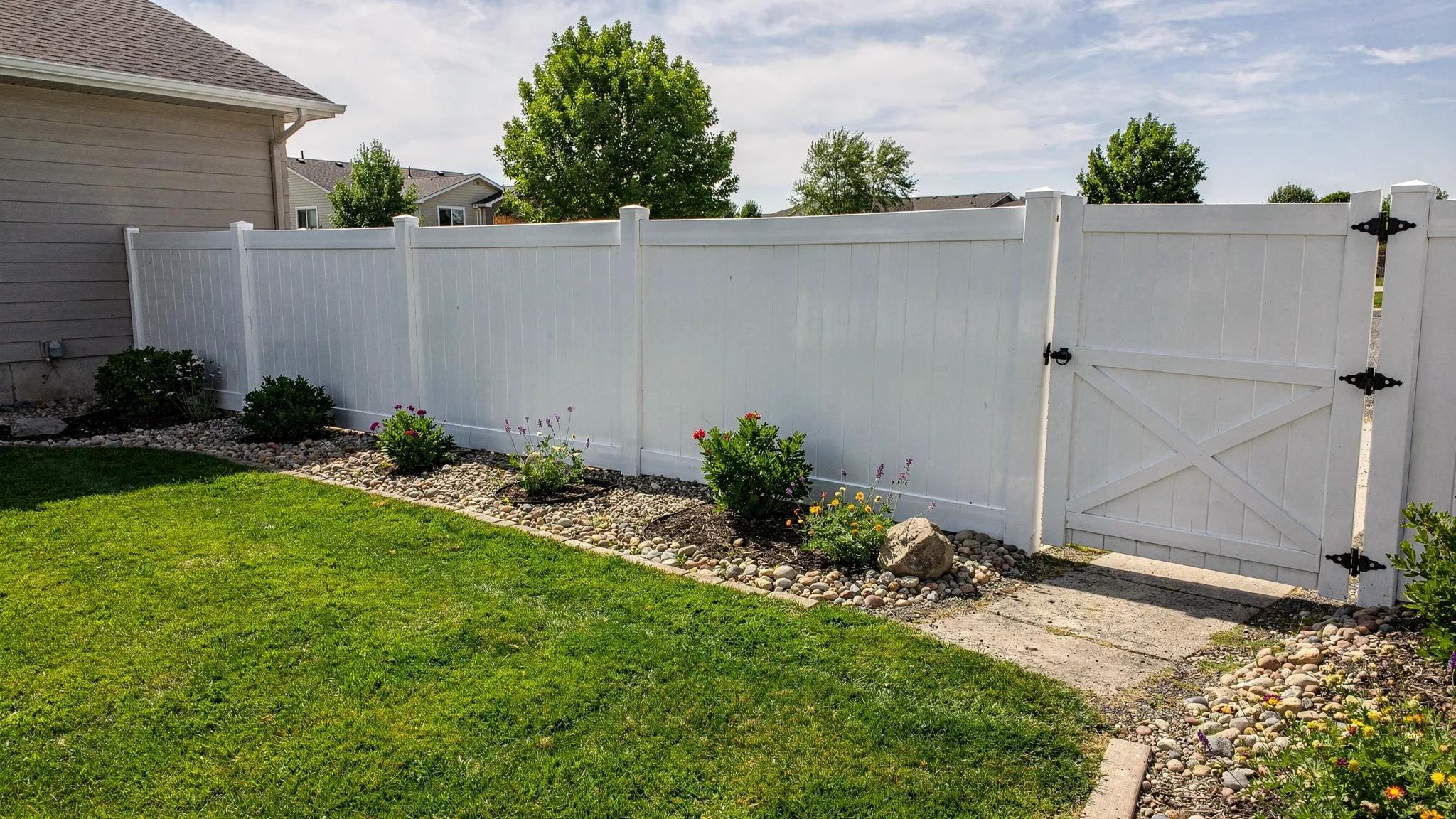
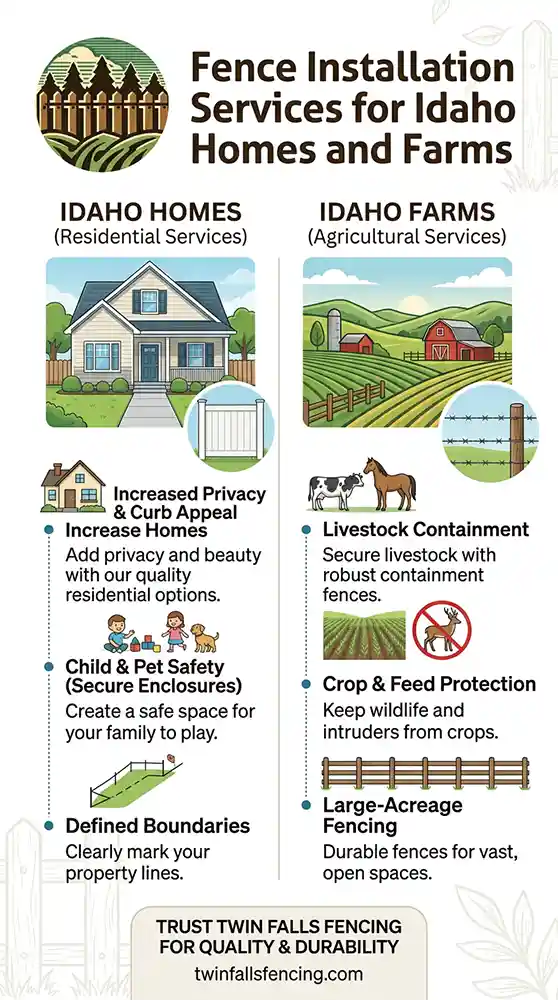
For homeowners, fencing is often about creating a more comfortable outdoor space. A well-built fence can make a yard feel private, protect children and pets, reduce unwanted access, and frame landscaping in a way that improves curb appeal.
Common residential fence options include wood, vinyl, chain link, and metal styles. Each has a different balance of appearance, maintenance, privacy, and durability. There is no single best fence for every home, but there is usually a best fit for your property and goals.
| Fence type | Best for | Maintenance level | Idaho considerations |
|---|---|---|---|
| Wood fencing | Privacy, natural appearance, custom styles | Moderate to high | Needs sealing or staining to resist sun, moisture, and aging |
| Vinyl fencing | Low-maintenance privacy and clean curb appeal | Low | Quality materials and proper post setting matter in wind and temperature swings |
| Chain link fencing | Pets, security, affordability, visibility | Low to moderate | Durable option for large yards, side yards, and utility areas |
| Metal or ornamental fencing | Front yards, pools, decorative security | Low to moderate | Works well when visibility and style are priorities |
Wood remains popular because it offers warmth, flexibility, and a classic look. It can be built in privacy, picket, shadowbox, board-on-board, or split rail styles. Vinyl is often chosen by homeowners who want privacy without the regular staining and sealing that wood requires. Chain link is practical for dog runs, large yards, and budget-conscious projects. Ornamental metal can provide security while keeping an open, upscale appearance.
If you are still comparing materials, Twin Falls Fencing has a deeper guide to the types of fencing commonly used in the area.
Fence installation services for Idaho farms and acreage
Farm fencing has a different job than residential fencing. It is less about curb appeal and more about containment, safety, workflow, and long-term reliability. A fence for cattle, horses, sheep, goats, or mixed-use acreage must be designed around animal behavior, pasture layout, equipment movement, and maintenance access.
Agricultural fencing options may include barbed wire, woven wire, high-tensile wire, electric fencing, field fence, rail fencing, and combinations of these systems. The right choice depends on what you are containing, how much pressure the fence will receive, and how permanent the fence needs to be.
For example, cattle fencing often needs strong brace assemblies, properly spaced posts, reliable gates, and a layout that supports pasture rotation or loading areas. Smaller animals may require woven wire or tighter spacing to prevent escape. Horses often need smooth, visible fencing that reduces injury risk. Garden and orchard fencing may focus on keeping deer or other wildlife away from vulnerable plants.
| Farm fencing need | Common solution | Why it matters |
|---|---|---|
| Cattle containment | Barbed wire, high-tensile, woven wire, electric systems | Strength, corners, and gate placement are critical |
| Horse areas | Smooth wire, rail, vinyl, or other highly visible options | Visibility and injury reduction are important |
| Sheep and goats | Woven wire or field fence | Smaller animals can slip through wider openings |
| Pasture rotation | Permanent perimeter with interior cross-fencing | Improves grazing control and land management |
| Equipment access | Wider gates and planned travel lanes | Reduces daily frustration and fence damage |
For Idaho cattle operations, fence design should not be treated as a generic project. Soil, slope, animal pressure, and gate placement can change the installation approach. Twin Falls Fencing covers these factors in more depth in its guide to cattle fencing in Idaho.
What professional fence installation services include
A quality fence installation is a sequence of important steps. Skipping one step can shorten the fence’s lifespan or make the finished project less useful.
Site review and consultation
The process usually begins with a walk-through of the property. This helps identify the purpose of the fence, the desired layout, obstacles, grade changes, access points, and any special concerns. For a home, that might mean privacy around a patio or a secure area for pets. For a farm, it could mean livestock flow, pasture divisions, or equipment gates.
This stage is also where expectations should be clarified. A good contractor should discuss material options, approximate layout, gates, maintenance, and any visible site challenges before work begins.
Layout and design planning
Fence layout affects both appearance and function. Straight lines, balanced gate placement, and clean transitions make a residential fence look intentional. On farms, thoughtful layout can save time every day by making chores easier and reducing pressure points where animals gather.
Custom fence planning is especially useful when a property has slopes, irrigation ditches, uneven terrain, existing structures, or mixed-use areas. In many cases, one property may benefit from more than one fence type. For example, a home might use vinyl privacy fencing along the backyard, chain link for a dog run, and agricultural fencing around an adjacent pasture.
Post setting and structural work
Posts are the foundation of the fence. If they are not properly spaced, aligned, braced, and set for the soil conditions, the rest of the fence will suffer. This is especially true in windy areas or on long fence runs where small weaknesses become large problems over time.
For agricultural projects, corner assemblies and brace posts are especially important because they carry the tension and pressure of wire fencing systems. For residential privacy fences, post depth, alignment, and anchoring affect whether panels stay straight and stable.
Gates and hardware
Gates often receive more wear than any other part of a fence. They swing, latch, sag, slam, and carry extra weight. A gate that is too narrow, poorly braced, or placed in the wrong location can become a daily frustration.
Professional gate installation should account for the type of use. Pedestrian gates, driveway gates, livestock gates, and equipment gates all require different planning. Hardware quality also matters because hinges, latches, and posts must support repeated use.
Cleanup and final inspection
The final stage should include checking alignment, gate function, hardware, fence tension, panel spacing, and overall workmanship. A clean job site and a final walk-through help ensure the property owner understands the finished installation and any recommended maintenance.
Permits, property lines, utilities, and local rules
Before installing a fence, Idaho property owners should take time to confirm practical and legal details. A fence contractor can help identify common concerns, but property owners are usually responsible for confirming property lines, HOA rules, easements, and local requirements.
If there is any uncertainty about a boundary, a licensed surveyor is the right professional to verify the legal property line. This is especially important before installing a long permanent fence, replacing an old boundary fence, or building near a neighbor’s property.
Underground utilities are another major concern. Before digging post holes, homeowners and contractors should use the proper utility notification process. In Idaho, Idaho Digline provides information about contacting 811 before excavation. This helps locate public underground utilities and reduces the risk of dangerous or costly damage.
Fence height, setbacks, corner visibility, pool barriers, and front-yard rules may also vary by city, county, or subdivision. If you live in an HOA neighborhood, review the design guidelines before choosing materials or colors.
What affects the cost of fence installation?
Fence installation pricing depends on more than the material alone. Two fences made from the same product can have very different costs if one property is flat and open while the other has slope, demolition, hard soil, tight access, multiple gates, or complex corners.
The most common cost factors include:
- Total linear footage and fence height
- Material type and quality
- Number, width, and style of gates
- Terrain, slope, soil conditions, and access
- Removal of old fencing or brush
- Post depth, bracing, and hardware requirements
- Custom design details or mixed-material layouts
For residential projects, privacy fences usually cost more than simple boundary fences because they use more material and require careful alignment. For farms, corners, bracing, wire tension, and gates can make a major difference in the final quote.
If your main goal is to understand budget-friendly options, this local guide to the cheapest fence to install in Twin Falls explains how different materials compare and why the lowest upfront price is not always the best long-term value.
DIY fence installation vs hiring a professional
Some simple fence projects can be handled by experienced DIY property owners, especially short decorative runs or temporary fencing. However, many Idaho projects are more demanding than they first appear. Long fence lines, privacy panels, agricultural corners, sloped yards, and heavy gates leave little room for guesswork.
DIY installation can become expensive if posts are misaligned, gates sag, concrete is used incorrectly, or underground utilities are not handled properly. Farm fencing adds another layer of complexity because tensioned wire systems depend on proper bracing and layout. If the structure is weak, the fence may lean, loosen, or fail under pressure.
Professional installation offers several advantages: better equipment, efficient layout, cleaner post setting, stronger gates, and experience with local soil and weather conditions. It also saves time for property owners who do not want to spend multiple weekends digging holes, hauling materials, and correcting mistakes.
How to choose the right fence for your property
The best fence is the one that fits the job. Before choosing a material, think through how you want the fence to perform five, ten, or twenty years from now.
For a residential backyard, privacy and low maintenance may matter most. For a front yard, appearance and visibility might be the priority. For a rental property, durability and simple repairs may be more important than custom details. For a farm, containment and gate placement usually come first.
A practical way to narrow your options is to compare purpose, maintenance, and lifespan. If you want a warm natural look and do not mind maintenance, wood may be a good fit. If you want privacy with less upkeep, vinyl is worth considering. If you need economical containment over a large area, chain link or agricultural wire may be more appropriate.
Climate should also influence your decision. Idaho sun can fade and dry out certain materials. Wind can stress panels and posts. Freeze-thaw cycles can reveal weaknesses in poor post installation. Sprinklers and irrigation can speed up wood decay or encourage rust on neglected metal components. The fence should be selected and installed with those realities in mind.
Maintenance after installation
Even a professionally installed fence benefits from routine care. Maintenance does not have to be complicated, but it should be consistent.
Wood fences should be inspected for loose boards, splitting, rot near the ground, and worn stain or sealant. Vinyl fences should be washed periodically and checked after windstorms for loose caps or shifted sections. Chain link fences should be inspected for tension, bent rails, damaged fabric, and rust at fittings. Agricultural fences should be checked regularly for leaning posts, loose wires, damaged insulators, and gate problems.
Seasonal inspections are especially helpful in Idaho. Spring is a good time to look for winter movement or moisture damage. Summer is useful for cleaning and checking UV-related wear. Fall is the right time to prepare for snow, wind, and freezing temperatures.
For a more detailed seasonal checklist, see the Idaho fence maintenance guide.
Why work with Twin Falls Fencing?
Twin Falls Fencing provides fence installation services for residential, commercial, and agricultural properties in Twin Falls and surrounding Idaho areas. The company installs and repairs wood, vinyl, chain link, gates, agricultural fencing, and other custom fence solutions designed around security, privacy, durability, and curb appeal.
Whether you are fencing a backyard, replacing an aging boundary fence, adding a gate, improving a commercial property, or planning fencing for a farm, local experience matters. A fence should fit the land, the weather, and the way you use your property every day.
Frequently Asked Questions – Fence Installation Services for Idaho Homes and Farms
What type of fence is best for Idaho homes? The best fence depends on your goals. Vinyl is a strong choice for low-maintenance privacy, wood offers a natural and customizable look, chain link is practical and affordable, and metal fencing works well for decorative security.
What type of fence is best for farms in Idaho? Farm fencing depends on the animals and layout. Cattle often require strong wire systems with well-built corners, while sheep and goats may need woven wire. Horses usually need smooth, visible fencing designed with safety in mind.
Do I need to call 811 before fence installation? Yes, underground utility locating should be handled before digging post holes. Idaho property owners can use Idaho Digline and the 811 process to reduce the risk of hitting buried utilities.
How long does fence installation take? The timeline depends on the size of the project, material availability, weather, site conditions, and complexity. A small residential fence may be much faster than a large agricultural project with multiple gates and long runs.
Can one property use multiple fence types? Yes. Many Idaho properties benefit from a combination of materials, such as vinyl for backyard privacy, chain link for pets, and agricultural fencing for pasture areas.
Should I repair or replace an old fence? If the damage is limited to a few boards, posts, rails, or hardware pieces, repair may be enough. If the fence is leaning throughout, has widespread rot, or no longer meets your needs, replacement may be the better long-term choice.
Plan your Idaho fence with Twin Falls Fencing
A good fence starts with a clear plan. If you are preparing to install fencing for a home, business, farm, or acreage property, Twin Falls Fencing can help you compare options, plan the layout, and choose materials that make sense for your property.
Contact Twin Falls Fencing to request a free fencing consultation and get practical guidance from a local fencing contractor serving Twin Falls and surrounding Idaho communities.