
A wood fence can do more than mark a property line. It can add privacy, improve curb appeal, protect children and pets, and make an outdoor space feel finished. But the quality of the finished fence depends heavily on who builds it. A beautiful wood fence installed poorly can lean, warp, sag at the gate, or start failing years earlier than it should.
That is why choosing the right wood fence contractor matters. In a place like Twin Falls, where fences face strong sun, seasonal temperature changes, wind, irrigation runoff, and varying soil conditions, workmanship is just as important as the lumber itself.
Here is what to look for before you hire a contractor for your next wood fence project.
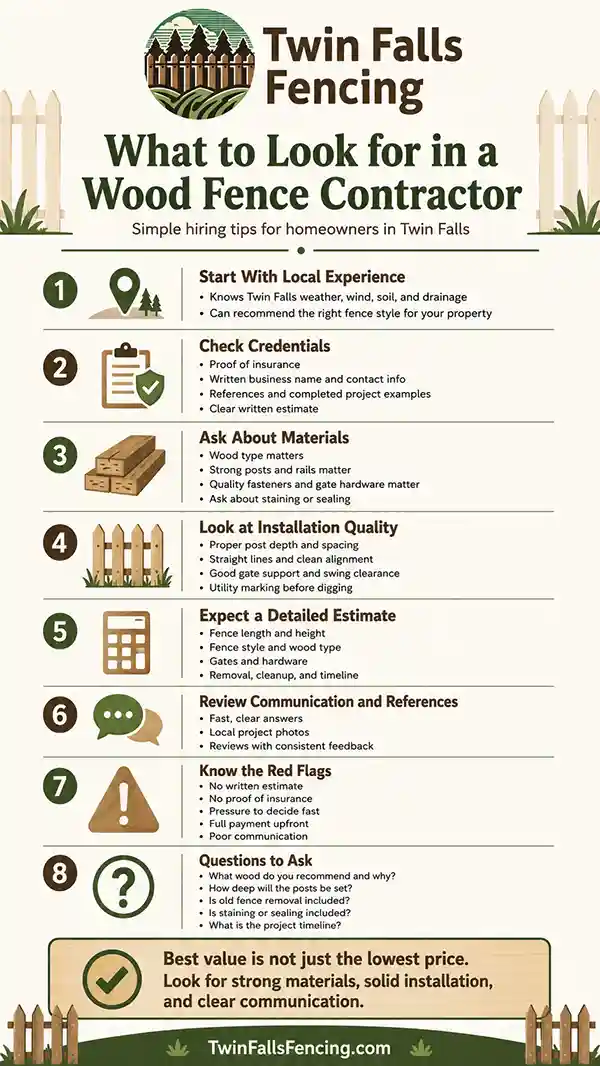
Start With Local Wood Fence Experience
Wood fencing is not a one-size-fits-all project. A contractor who understands the Twin Falls area will be better prepared to recommend designs and installation methods that hold up in local conditions.
Local experience matters because wood fences must be planned around practical site factors such as soil stability, slope, drainage, wind exposure, sprinkler systems, livestock areas, alley access, and neighborhood requirements. A contractor who regularly works in southern Idaho should know how to set posts securely, plan for gate movement, and choose materials that make sense for the climate.
Ask whether the contractor has completed projects similar to yours. A six-foot privacy fence around a residential backyard is different from a decorative front-yard fence, a ranch-style post-and-rail fence, or a commercial enclosure with heavy gate use.
A strong contractor should be able to explain what type of wood fence fits your property, not just sell you the same design they recommend to everyone.
Check Licensing, Insurance, and Professional Credentials
Before discussing styles or stain colors, confirm that the contractor is operating professionally. Requirements can vary by location and project type, so ask for current contractor registration, licensing information when applicable, and proof of insurance.
At minimum, a reputable fencing contractor should be willing to provide:
- Proof of general liability insurance
- Workers’ compensation coverage when applicable
- A written business name and contact information
- Local references or examples of completed work
- A clear written estimate and scope of work
Insurance is especially important because fence installation involves digging, heavy materials, tools, and potential property damage. If something goes wrong, such as hitting an unmarked irrigation line or damaging a neighbor’s property, you want to know you are working with a legitimate business that takes responsibility seriously.
A contractor who avoids basic documentation or says a handshake is enough should raise concerns.
Ask About Wood Types, Posts, and Hardware
Many homeowners focus on the fence boards, but posts, rails, fasteners, and hardware are just as important. A wood fence usually fails first at the posts or gates, not in the middle of a panel.
A knowledgeable wood fence contractor should explain the pros and cons of common materials such as cedar, pressure-treated lumber, and other available wood options. They should also explain why they recommend certain post sizes, rail spacing, picket thickness, and fastener types for your fence height and layout.
Here is a simple way to evaluate the material conversation:
| What to Ask | Why It Matters | What a Good Contractor Should Explain |
|---|---|---|
| What type of wood do you recommend? | Different woods vary in cost, appearance, durability, and maintenance needs | Why that wood fits your budget, style, and local conditions |
| What size posts will be used? | Undersized posts can lead to leaning and instability | Post dimensions, spacing, depth, and setting method |
| What fasteners do you use? | Poor fasteners can rust, stain the wood, or loosen early | Galvanized, coated, or corrosion-resistant options |
| How will gates be built? | Gates experience more stress than fence panels | Bracing, hinges, latch quality, and post support |
| Should the fence be stained or sealed? | Wood needs protection from sun and moisture | Recommended timing and maintenance schedule |
If a contractor cannot explain material choices in plain language, it may be a sign they are bidding quickly rather than planning carefully.
Look Closely at Installation Methods
Even premium lumber will not save a fence that is installed poorly. The best wood fence contractors pay attention to the details that most homeowners never see once the job is finished.
Post installation is one of the biggest differences between a fence that lasts and a fence that fails early. Posts need to be placed at proper intervals, set deep enough for the fence height and soil conditions, and installed with attention to drainage and alignment. On long runs, even small alignment mistakes become obvious.
Gates also deserve special attention. A contractor should plan gate openings around how you actually use the space. That might include lawn equipment access, RV parking, trash bin movement, livestock access, or commercial traffic. Gate posts often need stronger support than standard line posts because they carry more weight and movement.
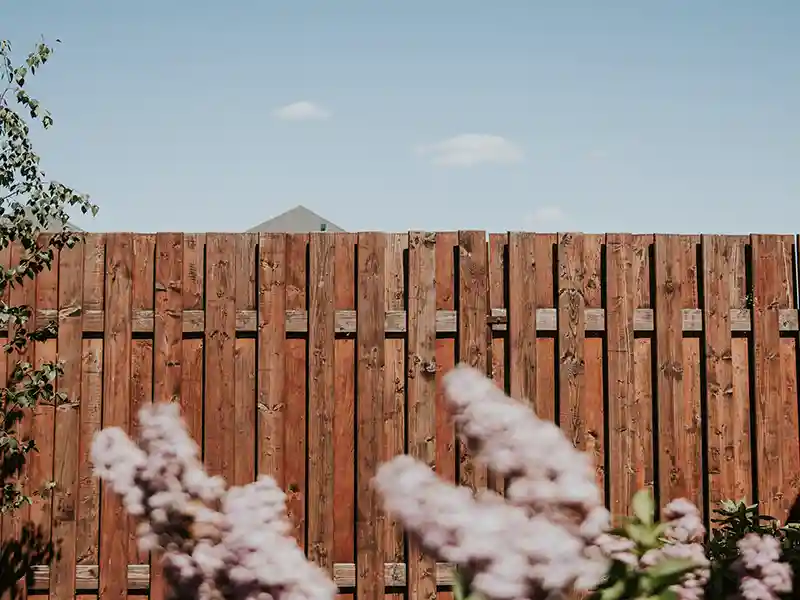
A professional installation plan should also account for:
- Property lines and neighbor boundaries
- Utility marking before digging
- Fence height rules and HOA requirements
- Ground slope and grade changes
- Sprinkler heads and irrigation lines
- Soil drainage near posts
- Gate swing direction and clearance
Before any digging starts, underground utilities should be marked. Homeowners and contractors commonly use the 811 utility notification process before excavation. A contractor who treats digging casually can create costly problems.
Expect a Detailed Written Estimate
A vague estimate is one of the easiest ways for misunderstandings to happen. A professional wood fence contractor should give you a written estimate that clearly explains what is included, what is excluded, and what could change the final cost.
The estimate does not need to be overly complicated, but it should be specific enough that you can compare it with other bids. If one quote is much lower than the others, a detailed breakdown can show whether the contractor is using cheaper materials, skipping removal, excluding gates, or leaving out staining.
| Estimate Item | Why It Should Be Included |
|---|---|
| Fence length and height | Confirms the size of the project and prevents scope confusion |
| Fence style | Privacy, picket, shadowbox, board-on-board, split rail, or custom design |
| Wood and post materials | Clarifies quality level and expected durability |
| Gates and hardware | Gates can significantly affect labor and material cost |
| Tear-out and disposal | Old fence removal is often a separate cost |
| Site preparation | Grading, brush clearing, or obstacle removal may affect pricing |
| Staining or sealing | Some contractors include it, while others price it separately |
| Timeline | Helps you plan around pets, children, access, and landscaping |
| Payment terms | Protects both homeowner and contractor |
| Cleanup expectations | Defines who removes debris and leftover materials |
If you want more background on how fence pricing works, Twin Falls Fencing has a helpful guide on the cheapest fence to install in Twin Falls. Even if you are set on wood, understanding cost drivers can help you make a smarter decision.
Evaluate Communication and Project Planning
The way a contractor communicates before the project often reflects how they will communicate during the project. Pay attention to how quickly they respond, whether they answer questions directly, and whether they take time to understand your goals.
Good contractors do not just ask how many feet of fence you need. They ask why you need the fence. Privacy, pets, pool safety, livestock control, curb appeal, and security can all lead to different recommendations.
For larger commercial, agricultural, or multi-property projects, material timing and delivery can also affect the schedule. Lumber, gates, hardware, and specialty materials may need to arrive in phases. If your project has complex supply needs, it is worth asking how the contractor manages deliveries and staging.
For most residential jobs, your fence contractor should handle the material planning. Still, the question is useful: “How do you make sure the materials are ready when the crew arrives?” A clear answer shows they have a process.
Review Past Work and Local References
Photos are helpful, but they do not tell the whole story. Ask to see examples of projects similar to yours. If possible, look for fences that have been standing for a few seasons, not just brand-new installations.
Fresh wood fencing almost always looks good on day one. The real test is whether the fence remains straight, the gates still close properly, the pickets stay secure, and the posts resist movement over time.
When reviewing past work, look for signs of quality:
- Straight fence lines and consistent spacing
- Gates that hang level and latch cleanly
- Smooth transitions on slopes
- Secure rails and clean cuts
- Proper clearance above soil or landscaping
- No obvious sagging, twisting, or uneven post tops
Online reviews can also help, but read them carefully. Look for patterns in customer feedback. A single negative review may not tell the full story, but repeated complaints about missed deadlines, poor cleanup, surprise charges, or unreturned calls should not be ignored.
Understand Maintenance Advice Before You Commit
Wood fencing is beautiful and versatile, but it does require maintenance. A trustworthy contractor should be honest about that. If someone tells you a wood fence needs no maintenance at all, that is a red flag.
Ask how soon the fence should be stained or sealed, how often it should be inspected, and what signs of wear to watch for. In Idaho, sun exposure, moisture, snow, and freeze-thaw cycles can all affect wood over time. Routine maintenance can help extend the life of the fence and keep it looking good.
A professional wood fence contractor should be able to discuss:
- Cleaning schedules
- Staining and sealing recommendations
- How to reduce soil-to-wood contact
- When to repair loose boards or rails
- How to prevent gate sag
- How sprinkler overspray affects wood
If you are still comparing materials, you may also want to review the differences between vinyl vs wood fencing before making a final decision. Wood offers warmth and design flexibility, while vinyl may offer lower long-term maintenance for some homeowners.
Watch for Red Flags
Not every low bid is a bad bid, but an unusually low price should be reviewed carefully. Sometimes a lower quote reflects a smaller crew or efficient process. Other times, it means the contractor is using thinner materials, shallow posts, cheap hardware, or leaving important work out of the estimate.
Common red flags include:
- No written estimate or contract
- No proof of insurance
- Pressure to decide immediately
- Requests for full payment before work begins
- Unclear material descriptions
- No discussion of utilities or property lines
- Poor communication before the sale
- No local references or project examples
- Dismissive answers to installation questions
The best contractors welcome informed questions. They know homeowners are making a meaningful investment and should feel confident before signing.
Compare Value, Not Just Price
When choosing a wood fence contractor, the goal is not simply to find the cheapest bid. The goal is to find the best value for the fence you actually want.
A slightly higher bid may be worth it if it includes stronger posts, better hardware, cleaner workmanship, responsible cleanup, and a contractor who stands behind the project. On the other hand, a premium price should come with a premium explanation. A contractor should be able to justify the cost through materials, design, experience, and service.
To compare bids fairly, make sure each contractor is quoting the same fence height, style, wood type, gate count, removal work, and finishing options. If the scopes are different, the prices are not truly comparable.
Questions to Ask a Wood Fence Contractor
Before you hire, ask direct questions and listen for clear, practical answers. You do not need to know every technical detail, but the contractor should be able to explain their approach without dodging or overselling.
Good questions include:
- What type of wood do you recommend for my property and why?
- How deep will the posts be set?
- What size posts and rails will you use?
- How will you handle slopes or uneven ground?
- What hardware do you recommend for the gates?
- Is removal of the old fence included?
- Will you coordinate utility marking before digging?
- Are permits or HOA approvals needed for this project?
- Is staining or sealing included, or should it be scheduled separately?
- What is the expected timeline from approval to completion?
A reliable contractor will not be bothered by these questions. In fact, they will usually appreciate working with a homeowner who cares about doing the project correctly.
Frequently Asked Questions
How do I know if a wood fence contractor is qualified? Look for local experience, proof of insurance, a clear written estimate, references, and the ability to explain materials and installation methods. A qualified contractor should be transparent and willing to answer detailed questions.
What should be included in a wood fence estimate? A good estimate should include fence length, height, style, wood type, post and rail details, gates, hardware, removal of old fencing if needed, site preparation, cleanup, timeline, and payment terms.
Do I need a permit for a wood fence in Twin Falls? Permit and approval requirements can vary based on location, fence height, property type, corner lots, easements, and HOA rules. A local contractor should help you understand what needs to be checked before installation.
What is the best wood for a fence? The best wood depends on your budget, style preferences, maintenance expectations, and local availability. Cedar is popular for appearance and natural resistance, while pressure-treated lumber is often used for structural components such as posts.
When is the best time to install a wood fence? Wood fences can often be installed through much of the year when ground and weather conditions allow. Spring, summer, and fall are popular, but scheduling early is smart because good contractors can book out during busy seasons.
Should I stain or seal my new wood fence? In most cases, staining or sealing is recommended to help protect wood from moisture and sun exposure. The best timing depends on the wood type, moisture content, and product used, so ask your contractor for project-specific guidance.
Work With a Local Wood Fence Contractor in Twin Falls
Choosing the right contractor can make the difference between a fence that simply gets built and a fence that looks good, functions well, and holds up over time.
If you are planning a wood fence for your home, business, or agricultural property, Twin Falls Fencing can help with installation, repair, and custom fence planning. Our team works with residential, commercial, and agricultural fencing needs across Twin Falls and surrounding Idaho areas.
Ready to talk through your project? Contact Twin Falls Fencing for a free fencing consultation and get practical guidance for your property, budget, and goals.