
A chain link fence may look simple from the street, but a reliable installation depends on dozens of details: post depth, wire gauge, gate hardware, tensioning, drainage, property lines, and how well the system fits your actual use. Hiring the right chain link fence contractor is the difference between a fence that stays straight for decades and one that sags, leans, or becomes difficult to latch after the first hard season.
For homeowners, business owners, landlords, and agricultural property owners in the Twin Falls area, chain link is popular because it is practical, cost-effective, secure, and adaptable. The key is not just choosing chain link. It is choosing a contractor who knows how to build it correctly for Idaho soil, wind, freeze-thaw cycles, pets, equipment access, and long-term maintenance.
Use this guide to compare contractors with confidence, ask better questions, and avoid the most common hiring mistakes.
Start by defining what the fence needs to do
Before you request estimates, get clear on the job the fence must perform. A contractor can give a better recommendation when they understand whether your priority is security, pet containment, curb appeal, boundary marking, access control, or protecting a commercial yard.
A residential backyard fence for a dog does not need the same materials as a chain link enclosure around equipment, a rental property, or a high-traffic gate. Likewise, a simple boundary fence may not need privacy slats, while a fence facing a road or neighboring property might benefit from them.
Write down the basics before you call:
- Approximate fence length and desired height
- Number and location of gates
- Whether the fence is for kids, pets, security, business use, or agricultural use
- Any existing fence that needs removal or repair
- Known obstacles such as slopes, irrigation lines, trees, concrete, or uneven soil
- HOA, city, county, or commercial site requirements
If your main goal is affordability, chain link is often one of the most budget-friendly installed fence types. For a broader look at local cost factors, see our guide to the cheapest fence to install in Twin Falls.
Look for local chain link experience, not just general handyman work
A reliable chain link fence contractor should understand the full fence system, not just how to set posts and stretch wire. Chain link installation requires correct spacing, bracing, tension, and hardware selection. Mistakes often do not show up on day one. They appear months later as loose fabric, leaning terminal posts, sagging gates, or bowed top rails.
Local experience matters in Southern Idaho. Twin Falls properties can deal with wind exposure, hard or rocky soil, irrigation drainage, temperature swings, and freeze-thaw movement. A contractor who regularly works in the Magic Valley will be better prepared to choose proper post depths, concrete methods, bracing, and layout solutions.
When you speak with a contractor, ask whether they regularly install chain link fences for properties like yours. A company that mainly builds decorative wood fences may still do good work, but you want confidence that they know chain link materials, gate systems, and tensioning techniques.
Verify insurance, business legitimacy, and jobsite practices
Do not skip the basics. A fence project involves digging, concrete, tools, hauling materials, and working near utilities. A contractor should be able to explain how they protect your property and their crew.
At minimum, ask about liability insurance, worker safety practices, and whether they follow local registration or permitting requirements where applicable. You should also ask how underground utilities are handled. In most cases, underground utility marking should be requested before digging. The national Call 811 system helps connect property owners and contractors with local utility marking services before excavation.
A reliable contractor will not treat utility marking, property lines, or permits as annoying details. They will raise those topics early because they understand the risk of hitting lines, building over a boundary, or installing a fence that conflicts with local rules.
Compare written estimates by specifications, not just the final price
The cheapest quote is not always the best value. Chain link fence bids can vary because contractors may be pricing different materials, different post sizes, different gate hardware, or different site preparation assumptions.
A strong estimate should be specific enough that you know what you are buying. If one contractor says only “install 4-foot chain link fence” and another lists height, coating, post type, gate size, removal, concrete, and cleanup, the second estimate gives you far more protection.
| Estimate item | What to look for | Why it matters |
|---|---|---|
| Fence height and layout | Linear footage, height, and gate locations | Prevents misunderstandings about project scope |
| Fabric details | Gauge, mesh size, and galvanized or coated finish | Affects durability, appearance, and security |
| Post and rail materials | Terminal posts, line posts, top rail, and bracing | Determines strength and resistance to leaning |
| Gate hardware | Hinges, latches, frames, drop rods, and lock options | Gates are often the first part to fail when underspecified |
| Installation method | Post depth, concrete use, tension wire, and stretching process | Separates professional installation from quick, weak work |
| Site work | Removal, grading, brush clearing, haul-off, and obstacles | Avoids surprise charges later |
| Timeline and warranty | Start window, expected duration, and workmanship coverage | Sets expectations and accountability |
If an estimate is vague, ask for clarification in writing. A professional contractor should be willing to explain the difference between a basic residential fence and a heavier-duty fence for commercial or high-use areas.
Understand the materials your contractor recommends
You do not need to become a fence technician, but you should understand the main material choices. Chain link fence strength depends heavily on wire thickness, post strength, coating, and gate design.
In chain link fencing, a lower gauge number generally means thicker wire. For example, heavier-gauge fabric is usually more durable than very light fabric. Commercial or security applications often call for stronger materials than a basic backyard fence.
Galvanized chain link is the standard choice for many properties because it resists rust and offers a clean, utilitarian look. Vinyl-coated chain link can provide a more finished appearance, often in black, green, or brown, while still keeping the open visibility that makes chain link useful.
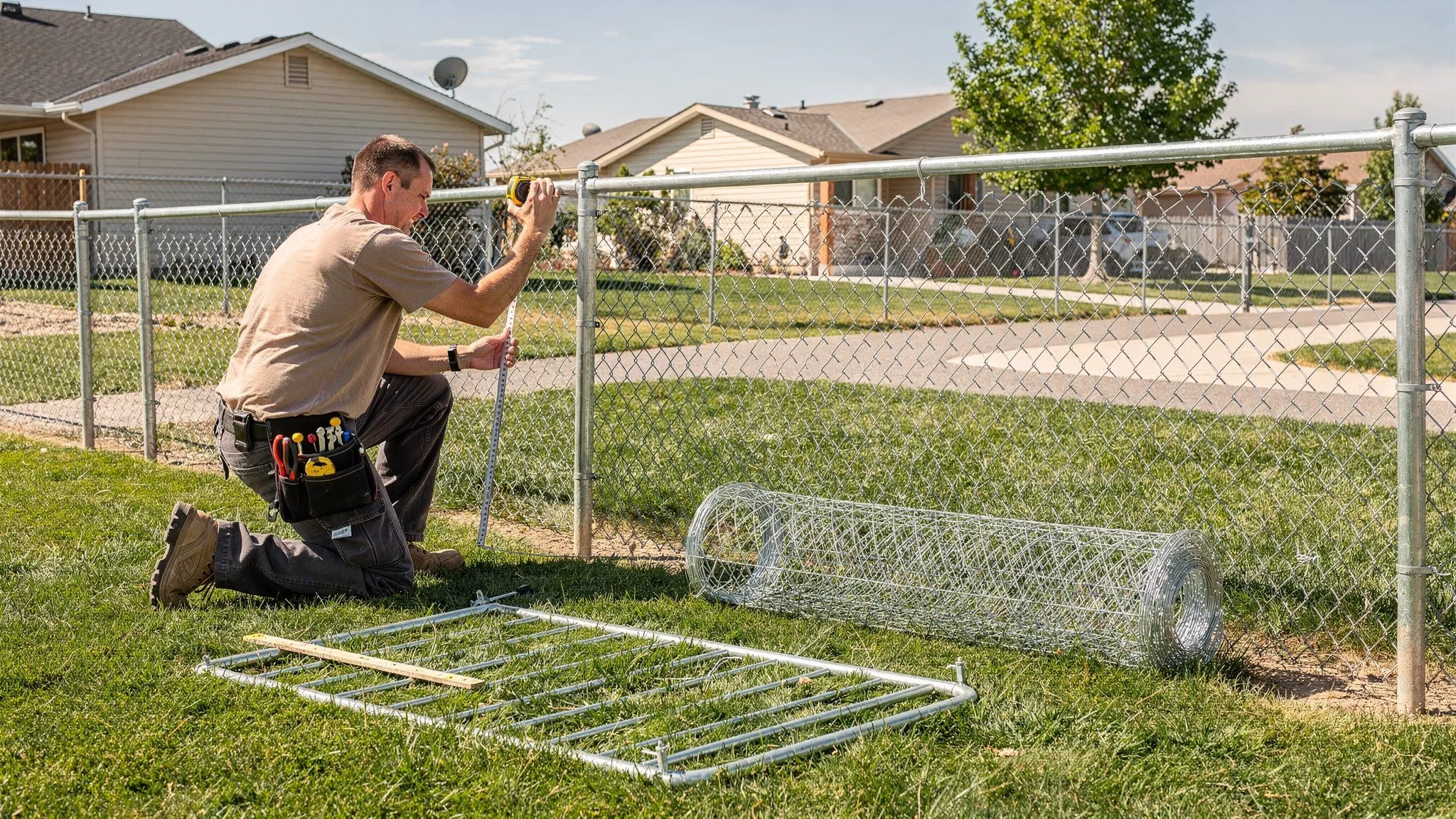
Gates deserve special attention. A well-built fence with a poorly planned gate will frustrate you every day. Ask the contractor how wide the gate should be for lawn equipment, trailers, trash bins, deliveries, livestock access, or commercial vehicles. Wider gates need stronger posts and better bracing than small walk gates.
Ask how the contractor handles layout, corners, and slopes
Chain link fence performance depends on proper layout. Corners, ends, and gate openings carry more stress than straight fence runs, so they need stronger terminal posts and bracing. If these areas are weak, the fence fabric can pull posts inward over time.
Sloped yards also require planning. Some chain link fences can follow the grade, while others may need stepping, custom gate adjustments, or additional tensioning. A reliable contractor should walk the property, discuss options, and explain how the finished fence will look on uneven ground.
Be cautious if a contractor gives a firm price without asking many questions or seeing the site. Photos can help with early estimates, but final pricing and layout decisions are usually more accurate after an on-site review.
Review photos, reviews, and communication style
A contractor’s past work tells you a lot. Look for project photos that show straight lines, clean corners, secure gates, and tidy cleanup. Reviews can also reveal whether the company shows up on time, communicates clearly, honors estimates, and handles problems professionally.
This principle applies to any service business where craftsmanship matters. Just as you might review service details, photos, and client feedback before booking with Kingdom Cute Hair Salon, you should expect a fence contractor to make it easy to evaluate their work before you hire them.
Pay attention to communication from the first call. Reliable contractors ask questions, explain options, and set realistic expectations. If communication is confusing before the job starts, it usually does not improve once materials are ordered and your yard is under construction.
Watch for red flags before you sign
Most fence problems start before installation, during the hiring process. If something feels rushed or unclear, slow down and ask for details.
Common warning signs include:
- No written estimate or contract
- Unclear material specifications
- No discussion of utility marking before digging
- Pressure to pay a large amount in cash upfront
- Refusal to explain post depth, gate posts, or bracing
- No proof of insurance when requested
- Poor communication or missed appointments
- A price that seems far lower than every other bid without a clear reason
A low bid may be legitimate if the project is simple or the contractor has efficient scheduling. But if the bid is low because it leaves out removal, gates, concrete, cleanup, or stronger materials, the final cost may rise or the fence may not last.
Know when repair is enough and when replacement makes more sense
Not every chain link problem requires a new fence. Loose fabric, damaged top rail, bent sections, broken gate hardware, and small rusted areas can often be repaired. If the posts are still solid and the layout still works, repair may be the better option.
Replacement becomes more practical when many posts are leaning, the fabric is badly corroded, gates no longer align, or the fence no longer meets your needs. For example, a property owner may replace a short backyard fence with a taller chain link system for dogs, security, or commercial use.
If you are unsure, ask the contractor to compare repair and replacement honestly. You can also review our local guide to fence repair cost to understand what typically affects repair pricing.
Consider local rules, pools, pets, and security needs
A dependable contractor should ask about code-sensitive uses. Pool fencing, front-yard height limits, corner visibility, easements, commercial security, and HOA requirements can all affect the design.
If the fence will enclose a pool, confirm requirements with local authorities before installation. Pool barriers often have specific rules for height, openings, gate swing, self-closing hinges, and latch placement. The U.S. Consumer Product Safety Commission publishes residential pool barrier guidance, but local code is what ultimately governs your project.
Pet owners should also discuss animal size, digging behavior, and jumping ability. A small dog may need tighter attention near gates and ground gaps. A large dog may require a taller fence and stronger gate hardware. Chain link is excellent for visibility and containment, but it should be configured around the animal and the property.
For security, ask about fence height, heavier fabric, top rail strength, lockable gates, and visibility. Chain link is often used for commercial yards because it creates a clear boundary without blocking sightlines.
Make sure maintenance expectations are clear
Chain link is relatively low maintenance, but it is not maintenance-free. Idaho weather can still loosen hardware, shift posts, rust exposed metal, and affect gates over time. A good contractor should explain basic care and what to inspect each year.
After installation, keep soil and debris from building up against the bottom of the fence. Check gate hinges and latches periodically. Watch for rust where coating is scratched, especially near ground level or gate hardware. If a post shifts or fabric loosens, address it early before the problem spreads.
For seasonal care tips across different fence materials, see our Idaho fence maintenance guide.
Questions to ask a chain link fence contractor
Before hiring, use these questions to compare contractors on more than price:
| Question | What a reliable answer should include |
|---|---|
| Have you installed chain link fences like this project before? | Relevant residential, commercial, or agricultural examples |
| What gauge and coating do you recommend? | A reason based on use, budget, appearance, and durability |
| How will you set and brace terminal posts? | Clear explanation of post depth, concrete, and bracing |
| How will you handle gates? | Proper width, hardware, latch type, and stronger gate posts |
| Who handles utility marking? | A clear process before digging begins |
| Are removal and cleanup included? | Specific details about old fence, debris, and haul-off |
| What could change the final cost? | Honest discussion of rock, roots, grade, access, or scope changes |
| Is there a workmanship warranty? | Written coverage and a clear way to request service |
You do not need perfect technical answers. You need clear, confident, practical answers. If a contractor cannot explain the basics in plain language, that is a sign to keep looking.
Choose the contractor who gives you confidence, not just a number
A reliable chain link fence contractor will help you make a practical decision. They will explain where you can save money, where it is worth upgrading, and what details matter most for your property.
For a basic backyard, that might mean a straightforward galvanized chain link fence with properly built gates. For a business, it may mean heavier fabric, stronger posts, and lockable access points. For a rural or agricultural property, it may mean using chain link only in specific high-use areas while choosing other fencing for long boundary runs.
The right contractor does not push one solution for every property. They match the fence to the purpose.
Frequently Asked Questions
How do I know if a chain link fence contractor is reliable? Look for local experience, a written estimate, clear material specifications, insurance information, good communication, and a willingness to discuss utility marking, gates, post depth, and site conditions.
Should I choose the lowest chain link fence bid? Not automatically. Compare what each bid includes. A lower quote may leave out stronger posts, quality gate hardware, removal, cleanup, or proper bracing. The best value is usually the clearest bid with the right specifications for your property.
What should be included in a chain link fence estimate? A good estimate should list fence height, approximate footage, fabric type, gauge, coating, posts, rails, gates, hardware, removal if needed, site preparation, cleanup, timeline, and warranty details.
Is chain link good for dogs? Yes, chain link can be a strong pet-containment option when height, bottom gaps, gate latches, and post strength are planned correctly. Large dogs, jumpers, and diggers may require extra design considerations.
Can chain link fencing be repaired instead of replaced? Often, yes. Damaged fabric, rails, gate hardware, and isolated sections can frequently be repaired. Replacement may make more sense when posts are failing, rust is widespread, or the fence no longer fits your needs.
Ready to plan your chain link fence in Twin Falls?
Twin Falls Fencing installs, repairs, and designs chain link fences for residential, commercial, and agricultural properties across Twin Falls and surrounding Idaho communities. Whether you need a secure backyard, a practical business enclosure, new gates, or repairs to an existing fence, our team can help you choose a durable solution that fits your property.
Contact Twin Falls Fencing to request a free fencing consultation and get a clear plan for your chain link project.