
A chain link fence is one of the most practical ways to secure a yard, business, storage area, dog run, equipment lot, or rural property without overspending on a full privacy fence. It is strong, versatile, relatively low maintenance, and easy to customize with gates, coatings, and privacy add-ons. But the value you get from it depends heavily on how well it is planned and installed.
Good chain link fence installation is not just about stretching mesh between posts. Long-term performance comes from the right post spacing, proper concrete footings, quality hardware, correct tension, and smart placement for your property’s use. In Twin Falls and the surrounding Magic Valley, local wind, freeze-thaw cycles, dry soil, irrigation runoff, and UV exposure all matter.
This guide walks through the practical decisions that help a chain link fence last, look clean, and protect your property for years.
Why Chain Link Still Delivers Strong Value
Chain link is popular because it solves several problems at once. It defines boundaries, keeps pets contained, deters trespassing, protects commercial equipment, and works well across uneven or open ground. Compared with many wood or ornamental fence options, it often provides more linear footage for the budget.
For homeowners, chain link can be ideal around side yards, backyards, gardens, kennels, and utility areas. For businesses, it works well for storage yards, access control, dumpsters, parking lots, and perimeter security. For agricultural properties, it can support certain containment and boundary needs when paired with the right posts, gates, and layout.
The best value comes when the fence is matched to its purpose. A light residential pet fence does not need the same specifications as a commercial security perimeter. A backyard gate used twice a week does not need the same hardware as a wide equipment gate used daily. Planning these details before installation helps you avoid premature sagging, loose fabric, gate misalignment, and avoidable repairs.
If you are comparing fence types primarily by cost, you may also find this local guide useful: Cheapest Fence to Install in Twin Falls. It explains why the lowest upfront price is not always the best long-term value.
The Main Parts of a Chain Link Fence
A chain link fence is a system. Each part affects the strength and appearance of the final installation. Understanding the components helps you compare estimates and know where quality matters most.
| Component | What it does | Why it matters |
|---|---|---|
| Fence fabric | The woven chain link mesh | Determines visibility, containment, and strength |
| Terminal posts | End, corner, and gate posts | Carry the highest tension loads |
| Line posts | Intermediate posts along the fence run | Keep the fence upright and aligned |
| Top rail | Horizontal rail across the top | Adds rigidity and keeps the fence line straight |
| Tension wire | Wire installed along the bottom or top | Helps prevent curling and improves containment |
| Tension bars and bands | Secure fabric to terminal posts | Maintain proper fabric tension |
| Tie wires or clips | Attach fabric to line posts and rails | Prevent loose or wavy mesh |
| Gates and hinges | Provide access points | Affect daily usability and security |
| Concrete footings | Anchor posts in the ground | Protect against leaning, frost movement, and wind stress |
A fence can look fine the day it is installed but fail early if the posts are too shallow, the fabric is under-tensioned, or gate posts are not sized for the gate load. This is why the framework is just as important as the mesh.
Choosing the Right Chain Link Material
Most chain link fences use galvanized steel fabric. Galvanizing helps protect the steel from rust by coating it with zinc. For properties where appearance matters more, vinyl-coated chain link is another option. It has a colored coating over the wire, commonly black, green, or brown, which can blend better with landscaping or commercial architecture.
The three main specifications to compare are height, gauge, and coating.
Fence height should match the purpose. A short fence may be enough for a garden boundary, while a taller fence is better for dogs, security, and commercial use. Gauge refers to wire thickness. With chain link, a lower gauge number means thicker, stronger wire. Residential installations often use lighter gauges than commercial or security fences.
Coating also affects service life. Galvanized chain link is a practical choice for many Twin Falls properties. Vinyl-coated mesh can improve appearance and add a protective layer, but it may cost more upfront. In areas where irrigation spray, fertilizer, road salt, or frequent abrasion are concerns, quality coating and maintenance become more important.
| Decision | Good fit | Considerations |
|---|---|---|
| Galvanized chain link | Utility areas, pet containment, budget-conscious projects | Practical appearance, strong value, widely used |
| Vinyl-coated chain link | Front-facing yards, schools, parks, commercial sites | Better visual appeal, higher upfront cost |
| Taller fence height | Security, large dogs, commercial perimeters | May require stronger posts and local code review |
| Heavier gauge fabric | High-use areas, business properties, impact-prone locations | Higher material cost, better durability |
| Privacy slats | Yards or sites needing partial screening | Adds wind load and may require stronger framework |
If privacy is your main goal, chain link can be upgraded with slats or screening, but it is still not the same as a full privacy fence. For side-by-side material comparisons, see Vinyl vs Wood Fencing.
Planning the Fence Layout
The strongest chain link fence starts with a practical layout. Before any digging begins, walk the property and decide exactly what the fence needs to accomplish. Mark corners, gate locations, slope changes, utility areas, irrigation lines, and access routes.
Gate placement deserves extra attention. A gate should be located where it naturally supports foot traffic, vehicles, lawn equipment, animals, deliveries, or emergency access. If you install a gate in the wrong place, you may end up driving across landscaping, dragging trash bins around obstacles, or constantly wishing the opening were wider.
For residential yards, think about pets, children, mowing patterns, and neighbor sightlines. For commercial properties, think about traffic flow, locking hardware, lighting, vehicle turning radius, and equipment storage. For agricultural or rural properties, think about livestock movement, water access, field equipment, and future expansion.
Before digging post holes, always check for underground utilities. The national 811 system exists to help property owners and contractors locate buried lines before excavation. You can learn more through Call 811 before planning any digging project.
Local Conditions in Twin Falls That Affect Installation
Southern Idaho’s climate can be tough on fences. Chain link handles the region well, but installation details still matter.
Wind is one of the biggest considerations. Standard chain link fabric allows air to pass through, which reduces wind load compared with solid privacy fencing. However, adding privacy slats or windscreen changes the equation. More surface area means more force on posts, rails, and footings. If you want screening, the framework may need to be upgraded.
Soil conditions also vary. Some sites have compacted soil, rock, caliche-like layers, irrigation-softened ground, or fill material near driveways and buildings. Poor soil can cause posts to shift if holes are not sized and set properly. Drainage matters as well. Standing water around posts can accelerate corrosion and movement, especially through freeze-thaw cycles.
UV exposure is another factor. Galvanized steel holds up well, but vinyl coatings, plastic privacy slats, and gate hardware can age faster under intense sun if they are low quality. Choosing materials designed for outdoor exposure protects your investment.
For a broader look at local fence longevity, read How Long Should a Fence Last in Twin Falls?.
Step-by-Step Chain Link Fence Installation Overview
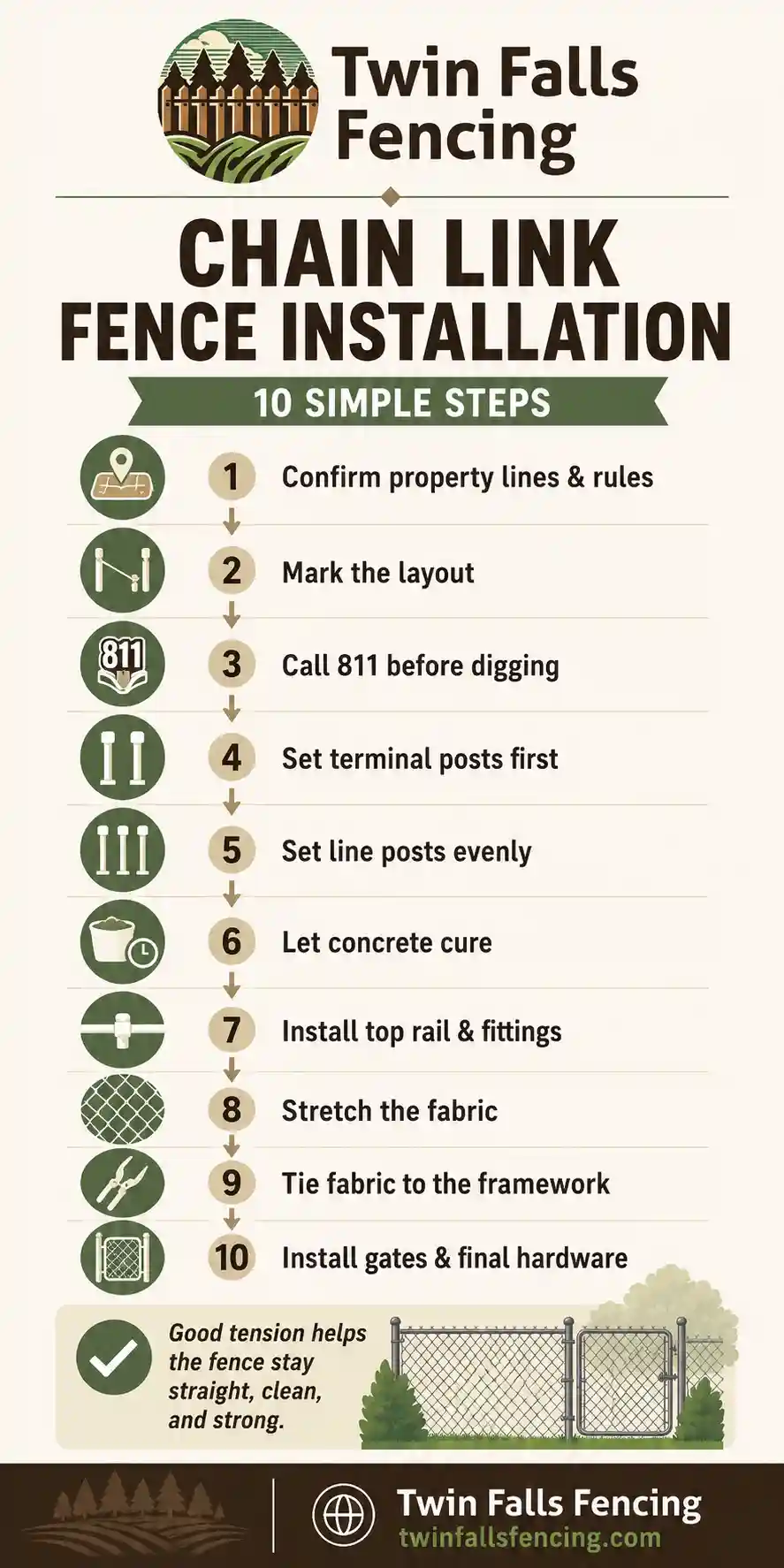
Every site is different, but a professional chain link fence installation generally follows a clear sequence. Skipping steps or rushing alignment is where many DIY problems begin.
- Confirm the property line and rules: Verify your property boundary, check HOA requirements if applicable, and review local fence height or setback rules before installation.
- Mark the layout: Use stakes and string lines to mark corners, straight runs, gate openings, and terminal post locations.
- Locate utilities: Contact 811 before digging so underground utility lines can be marked.
- Set terminal posts: Install corner, end, and gate posts first because they carry the most tension and load.
- Set line posts: Space line posts evenly along the string line, keeping them plumb and correctly aligned.
- Allow concrete to cure: Give footings adequate time to set before stretching fabric, especially on load-bearing terminal posts.
- Install top rail and fittings: Attach rails, brace bands, tension bands, caps, and other fittings.
- Stretch the fabric: Unroll the chain link fabric, attach it to a terminal post, and stretch it evenly to remove slack.
- Tie fabric to the framework: Secure the mesh to line posts, top rail, and tension wire with proper ties or clips.
- Install gates and final hardware: Hang gates, adjust hinges, set latches, and confirm smooth swing, clearance, and alignment.
The most technical part is tensioning the fabric. If it is too loose, the fence will look wavy and may bow under pressure. If it is stretched improperly, the mesh can deform or pull posts out of alignment. Good tension gives the fence a straight, clean appearance and better resistance to impact.
Where Quality Matters Most
A chain link fence can be affordable without being cheaply built. The key is knowing which parts deserve investment.
| Area | Why it matters | Value-focused recommendation |
|---|---|---|
| Terminal posts | Hold corners, ends, and gates under tension | Do not undersize posts or footings |
| Gate posts | Carry swinging weight and daily movement | Upgrade for wide or heavy gates |
| Fabric gauge | Affects strength and resistance to bending | Match gauge to use, pets, and security needs |
| Bottom tension wire | Reduces lifting and curling at ground level | Useful for dogs and perimeter security |
| Coating quality | Protects against corrosion and weathering | Choose outdoor-rated galvanized or coated materials |
| Installation alignment | Affects appearance and long-term stability | Use accurate layout, plumb posts, and proper tension |
For many properties, the best approach is not the most expensive fence. It is the fence with the right specifications in the right places. For example, you might use standard galvanized mesh for long straight runs but invest in stronger gate posts, a wider access gate, and bottom tension wire where pets are present.
Common Chain Link Installation Mistakes
Many chain link fence problems show up months or years after installation. Most can be traced back to shortcuts during planning or construction.
One common mistake is setting posts too shallow or using inadequate concrete. Posts are the foundation of the entire fence. If they move, the fabric loosens, gates drag, and the fence line begins to lean.
Another mistake is poor gate planning. Gates need more support than line posts because they move and carry weight. A small walk gate is one thing. A double drive gate for equipment or vehicles requires stronger posts, careful spacing, and proper hardware.
Poor tension is also common. Loose mesh may seem minor at first, but it can sag, flap, bend, or become easier to climb under. Over time, loose fabric also puts uneven stress on ties and terminal posts.
Finally, some property owners add privacy slats to a fence that was not built for the extra wind load. In windy areas around Twin Falls, this can lead to leaning posts or damaged fittings. If you plan to add slats, mention that before installation so the framework can be designed accordingly.
DIY vs Professional Installation
A small, straight chain link fence on level ground may be manageable for an experienced DIY homeowner with the right tools. However, larger projects, sloped lots, hard soil, corners, multiple gates, and commercial security needs are more demanding.
DIY installation often becomes difficult during post setting and fabric stretching. Digging consistent holes, keeping posts perfectly plumb, working around utilities, and tensioning mesh cleanly require time and equipment. If the fence is not aligned correctly, the finished result can look uneven even if the materials are good.
Professional installation is usually the better choice when the fence needs to protect valuable property, contain pets reliably, meet business security needs, or include wide gates. It can also reduce the risk of rework. A fence that has to be corrected after the posts are set may cost more than installing it properly the first time.
Value also includes broader property protection. Fence damage, theft prevention, liability, and asset security can overlap with insurance planning, especially for business owners or people managing property in more than one region. Idaho property owners should review local coverage with a licensed agent to understand what is and is not protected.
Maintenance for Long-Term Value
Chain link is low maintenance, but it is not no maintenance. A simple seasonal check can add years of useful life.
In spring, inspect posts for movement after winter freeze-thaw cycles. Check that gates close properly, latches align, and hinges are not loose. Look for areas where soil has washed away from the bottom of the fence.
In summer, rinse dust and debris from the fence if needed, especially near irrigation spray, fertilizer, or lawn chemicals. Avoid letting sprinklers constantly hit posts and fittings. Repeated moisture and mineral deposits can shorten the life of metal components.
In fall, trim back weeds, vines, and grass that hold moisture against the fabric. Vegetation can also pull on mesh and make inspections harder. Before winter, make sure gates have enough ground clearance for snow, frost heave, or packed debris.
If you see rust spots, bent rails, loose ties, sagging fabric, or gate misalignment, address them early. Small repairs are usually easier and less expensive than waiting until the fence loses tension or a gate post shifts. For more seasonal care advice, visit the Idaho Fence Maintenance Guide.
When Chain Link Is the Right Choice
Chain link is a strong option when you want security, visibility, airflow, and cost efficiency. It is especially useful for backyards, dog runs, commercial lots, schools, parks, storage areas, farms, and utility enclosures.
It may not be the best choice if your top priority is full privacy, a decorative front-yard appearance, or noise reduction. In those cases, vinyl, wood, ornamental metal, or a hybrid design may be better. Still, chain link can often be combined with privacy slats, landscaping, or strategic placement to create a practical solution that looks clean and performs well.
The most important question is not simply, “Is chain link good?” The better question is, “What chain link design fits this property, this use, and this budget?” When the design is right, chain link offers one of the best value-to-performance ratios in fencing.
Frequently Asked Questions
How long does a chain link fence last in Twin Falls? A properly installed galvanized chain link fence can last for decades with basic maintenance. Local conditions such as wind, soil movement, irrigation exposure, and installation quality all affect lifespan.
Does every chain link fence post need concrete? Most long-lasting chain link installations use concrete for terminal posts, gate posts, and line posts. Concrete helps keep the fence plumb, stable, and properly tensioned over time.
Is vinyl-coated chain link worth it? Vinyl-coated chain link can be worth it when appearance matters or when you want an additional protective coating. Galvanized chain link is still a strong value for utility and budget-focused projects.
Can chain link fence be installed on a slope? Yes. Chain link can often follow gradual slopes better than rigid panel fences. Steeper grades may require special layout, fabric adjustment, or stepped sections.
What height should I choose for a chain link fence? The best height depends on the purpose. Pet containment, pool areas, commercial security, and property boundaries may all require different heights. Always check local rules and HOA requirements before installing.
Can privacy slats be added later? Yes, privacy slats can often be added later, but they increase wind load. If you know you want slats, plan for them before installation so the posts and framework can be sized appropriately.
Get a Chain Link Fence Built for Lasting Value
A chain link fence is only as good as its layout, materials, post setting, gate design, and installation quality. If you want a fence that stays straight, works smoothly, and fits your property’s needs, local expertise matters.
Twin Falls Fencing provides chain link fence installation, fence repair, gate installation, residential fencing, commercial fencing, agricultural fencing, and custom fence planning throughout Twin Falls and nearby Idaho communities. For practical guidance and a free fencing consultation, contact Twin Falls Fencing today.