
A chain link fence contractor in Twin Falls handles installation, repair, and replacement of chain link fencing for residential, commercial, and agricultural properties across the Magic Valley. The work includes setting terminal and line posts, stretching and tensioning fabric, building gates, and planning layouts around slopes, utilities, and property lines.
Hiring the right contractor matters because chain link looks simple but fails in specific ways when it is installed poorly. Terminal posts lean inward when bracing is wrong. Gates sag after the first winter when the post is undersized. Fabric pulls loose when tensioning is rushed. None of that shows up on installation day. It shows up a season or two later, after the contractor has moved on.
For property owners in Twin Falls, the most common uses for chain link are pet containment, security enclosures, commercial yard boundaries, pool fencing, and agricultural applications. Each one has different material requirements and different failure points. A contractor who understands those differences will ask questions before quoting. One who does not will give you the same fence regardless of what you actually need.
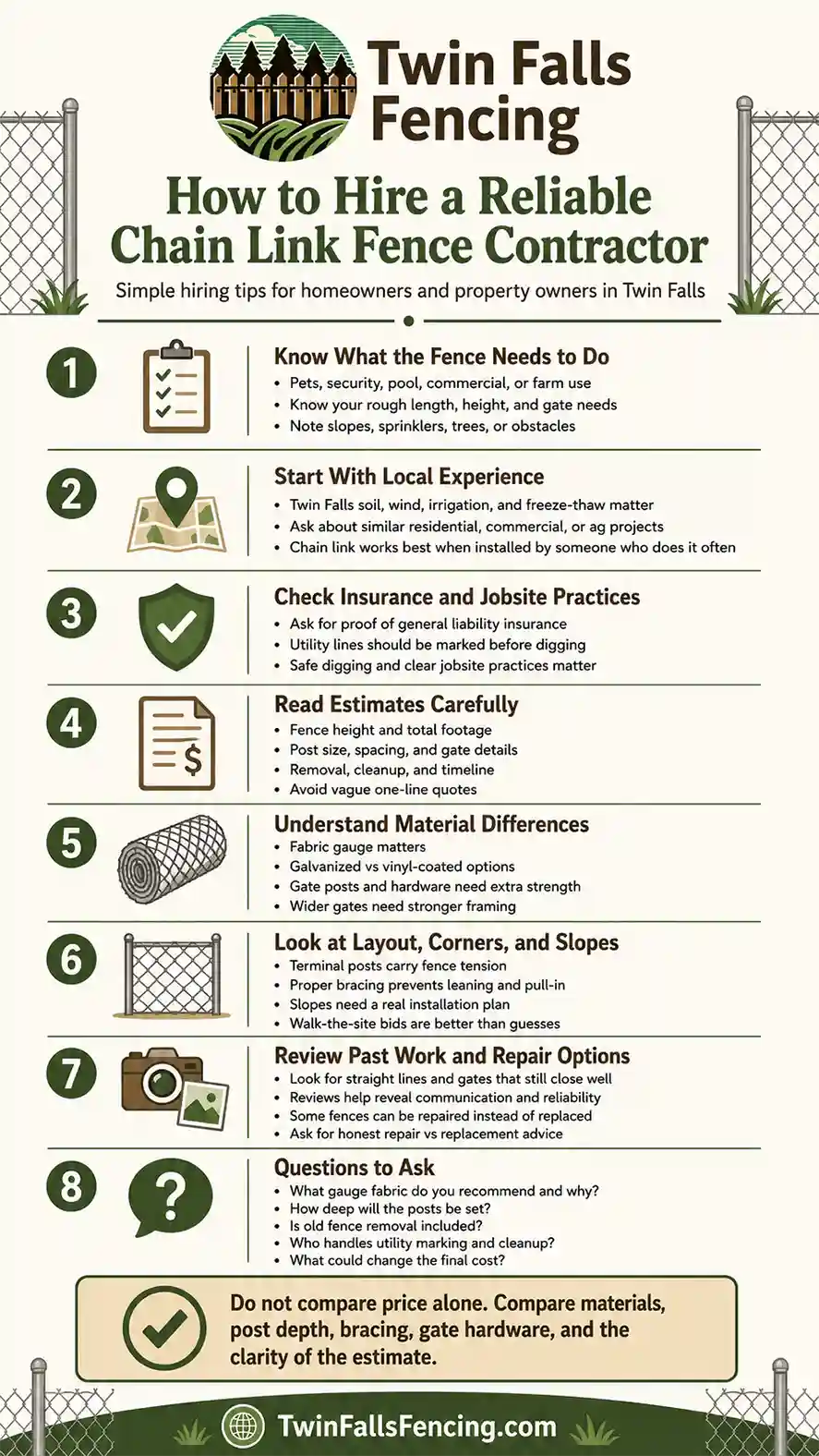
Know What the Fence Actually Needs to Do
Before you call anyone, get clear on the job the fence has to perform. That sounds obvious, but it changes the entire conversation.
A backyard fence for a medium-sized dog is a different job than a commercial enclosure with daily equipment access. A basic boundary marker has different material requirements than a security fence around a rental property. A fence in a flat yard with consistent soil is simpler than one running across a slope with irrigation lines buried in unpredictable locations.
Write down the basics first. Approximate fence length and height. Number of gates and where they need to be. What you are containing or securing. Any obstacles you know about, such as slopes, sprinkler heads, concrete, or trees. HOA or city requirements if they apply.
Showing up to a contractor conversation with that information will get you a more accurate estimate and a faster answer on what actually fits your situation.
If cost is a primary driver, chain link is usually one of the more affordable installed fence options available. For context on how local pricing breaks down across fence types, see our guide to the cheapest fence to install in Twin Falls.
Local Experience Is the Starting Point
A contractor who regularly works in the Magic Valley will be better prepared than one who does not. Twin Falls properties deal with hard soil, rocky ground in spots, irrigation drainage, strong wind exposure, and freeze-thaw cycles that work on posts and concrete all winter. These are not theoretical concerns. They affect how deep posts need to go, how concrete should be poured, and how bracing should be planned at corners and gate openings.
Chain link is also a system. It is not just posts and wire. Correct spacing, proper tensioning, terminal post bracing, hardware selection, and gate construction all interact. A contractor who mostly builds wood privacy fences can probably install chain link, but you want someone who does it regularly enough to know where the details matter.
Ask them directly. What projects have they done that are similar to yours? A residential pet fence, a commercial enclosure, and an agricultural boundary are three different jobs with different material requirements and different points of failure.
Insurance and Jobsite Practices First
Do not skip this step. Fence installation involves digging, heavy materials, concrete, and work right at property lines. Things go sideways sometimes.
Ask for proof of general liability insurance. Ask about worker safety practices. Ask how they handle underground utilities. Underground lines should be marked before any digging starts. The Call 811 system connects contractors and property owners with local utility marking services before excavation. A contractor who treats that step as optional or annoying is not thinking about the full risk of the job.
Any contractor who hedges on providing basic documentation should raise a flag.
Read Estimates Carefully
The cheapest quote is not automatically the wrong choice, but a vague quote is almost always a problem.
Chain link bids can vary because contractors are pricing different things. One might include a stronger post gauge, heavier fabric, and proper gate hardware. Another might be pricing the minimum materials for a basic residential fence. If you are comparing just the final number without understanding what is behind it, you are not actually comparing the same job.
A useful estimate should spell out fence height and linear footage, fabric gauge and coating type, post dimensions and spacing, gate count and size, gate hardware specifics, whether old fence removal is included, site preparation details, cleanup, and a realistic timeline.
If an estimate just says “install chain link fence, 200 feet, $X” and nothing else, ask for more detail in writing. A contractor who has done this work seriously will not have trouble providing it.
Understand the Material Differences
You do not need to become a fence technician, but a few things are worth knowing before you talk to contractors.
Wire gauge in chain link fabric is counterintuitive. Lower numbers mean thicker wire. Heavier fabric costs more but holds up longer under pressure, resists cutting more effectively, and handles impact better. For basic residential use, lighter fabric may be fine. For security, pets, or commercial applications, heavier gauge is usually the right call.
Galvanized chain link is the standard for most properties. It handles moisture well, resists rust under normal conditions, and is the most cost-effective option. Vinyl-coated chain link is available in black, green, and brown. It looks more finished and can be a good fit for front yards or properties where appearance matters, though it costs more.
Gates are where a lot of chain link fences quietly fail. The gate post carries significantly more stress than a line post. It needs to be set deeper, set in concrete, and properly braced. Undersized gate hardware wears out faster than it should. Ask specifically what hinge weight and latch type they are using, and whether the gate post size matches the gate width and expected use.
Wider gates for equipment, trailers, or vehicles need stronger framing and hardware than a standard walk gate. Get specific about what you need to fit through before the contractor prices anything.
Layout, Corners, and Slopes
Corners, ends, and gate openings are the stress points in a chain link fence. They carry the tension of the entire run. If terminal posts at those locations are undersized, set too shallow, or braced poorly, the fence fabric will gradually pull them inward. That is one of the most common failure modes and one of the most avoidable.
Sloped yards need a real plan. Some installations follow the grade, which works on gradual slopes. Steeper changes may need stepped panels, custom gate adjustments, or additional tensioning. A contractor should walk the property before giving a firm price. A bid given without seeing the site, based only on photos or a phone description, is an estimate at best.
If a contractor gives you a confident final price without asking many questions, that is worth slowing down on.
Reviewing Past Work and References
Project photos show you what the contractor’s finished work looks like, but they mostly show new work. New chain link almost always looks fine on installation day.
Ask to see examples that have been standing through a season or two. Look for whether the fence lines are straight, whether gate posts have stayed plumb, and whether gates still close cleanly. Online reviews tend to fill in what photos cannot, specifically whether the company showed up when they said they would, communicated clearly when problems came up, and honored what was in the estimate.
Look for patterns in reviews. One complaint is noise. The same complaint from multiple customers is how that contractor operates.
Repair Versus Replacement
Not every problem requires a new fence. Loose fabric, a damaged rail section, worn gate hardware, and isolated rust spots can usually be repaired if the posts are still structurally sound and the layout still works for the property.
Replacement starts to make more sense when posts are leaning in multiple spots, rust has spread extensively through the fabric, gates no longer align at all, or the fence no longer fits the current use. Someone who originally put up a four-foot fence and now has a large dog or a security concern may be better served replacing the whole run than patching a system that was underbuilt for the job.
If you are unsure, have the contractor compare repair and replacement honestly. Most legitimate contractors will tell you when repair is the right call. For more on what drives repair costs locally, see our local guide to fence repair cost.
Maintenance Is Not Optional
Chain link is lower maintenance than wood, but it is not zero maintenance. Hardware loosens over time. Posts can shift, especially after hard winters. Rust shows up first where coating gets scratched, usually near ground level and at gate hardware.
After installation, keep soil and debris from building up against the bottom of the fence. Check hinges and latches once a year. If a post starts to move or fabric starts to pull, deal with it early before the problem compounds.
For seasonal care tips across fence types in this climate, see our Idaho fence maintenance guide.
Questions Worth Asking Every Contractor
What gauge fabric do you recommend for this use, and why? How deep are the terminal posts being set, and how are they braced? What is the post depth on gate posts specifically? How are you handling the slope or grade on this section? Who coordinates utility marking before digging starts? Is old fence removal included? What does cleanup cover? What could change the final cost once you are on site?
A contractor who has done this work properly will answer all of these without hesitation. Vague answers or dismissiveness on any of them is information.
Get a Consultation Before You Commit
Twin Falls Fencing installs, repairs, and designs chain link fences for residential, commercial, and agricultural properties across Twin Falls and surrounding communities. Contact Twin Falls Fencing to request a free consultation and get a clear plan for your project before any work starts.